Bags and Blades Packing Guide
Geometry wins runs—rotate cleanly, protect hearts, and keep synergies touching.
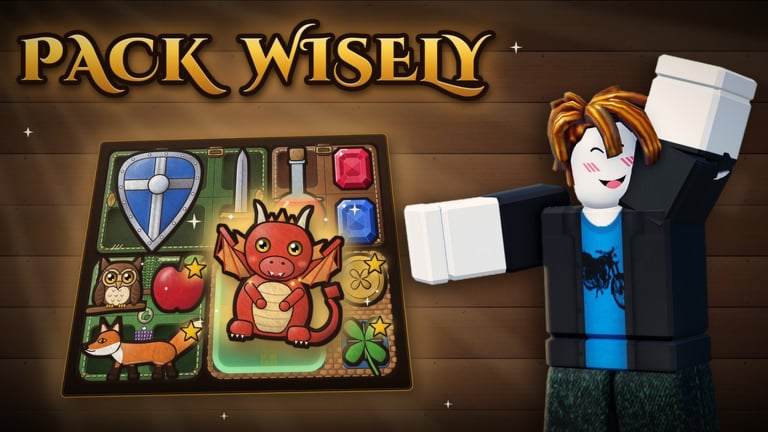
In Bags and Blades, combat power is mostly where tiles sit, not only what the tooltip says. This packing guide teaches adjacency discipline, rotation habits, slack space, and heart-safe layouts for the Roblox inventory auto-battler. Pair it with Controls for device inputs and Recipes and Fusions for craft timing.
Why packing beats shopping alone
Two players can buy the same items and finish with opposite results. The winner usually:
- Keeps synergy partners edge-adjacent
- Rotates shapes before forcing a bad fit
- Protects a sustain pocket when hearts are low
- Leaves slack for the next awkward legendary
- Sells vanity tiles that break the engine
Auto-battles only execute the board you built. Fancy borders in the wrong holes still miss.
Core packing principles
1. Engines live in neighborhoods
Cluster pieces that buff each other. Pets beside pet enablers, burn beside ignition, mana spenders beside generators, minion tools beside soul sources. A powerful tile isolated in a corner is a trophy, not an engine.
2. Rotate before you compromise
On PC use R or right-click to rotate; on mobile use a second finger; on controller press X. Try all orientations before selling a key piece “because it does not fit.” Many “impossible” shapes fit after one turn.
3. Maintain slack cells
A completely full bag feels satisfying and then bricks when the shop offers a game-winning L-shape. Keep 2–4 flexible cells—or a movable pouch region—so mid-run upgrades remain possible.
4. Sustain pocket near danger thresholds
Below three hearts, dedicate space to armor, regen, block, or other survival tools even if it delays a greedy fusion. Reaching fight ten requires surviving fight six.
5. One finisher lane
Especially on Paladin shells: defense without a kill condition stalls forever. Reserve a lane for the weapon or fusion that actually ends battles.
Step-by-step packing routine each shop
- Snapshot your plan in one sentence (“pet crit core” / “burn corridor” / “souls army”).
- Identify tiles that no longer serve that sentence—candidates to sell.
- Place new purchases in the neighborhood they belong to, rotating first.
- Re-check that sustain still exists if hearts ≤ 3.
- Confirm slack remains for at least one large shape.
- Only then end shop and fight.
Rushing the fight button after a panic buy is the most common silent mistake.
Adjacency patterns that scale
| Pattern | Use when | Failure mode |
|---|---|---|
| Compact core | Early Ranked, beginners | Core too small, no sustain |
| Corridor | Burn, chain triggers | Corridor severed by random armor |
| Lattice | Block/Paladin | Lattice with zero damage |
| Swarm pockets | Pets/minions | Pockets scattered across bag |
| Hybrid split | Pivot runs | Both halves underbuilt |
Pick one primary pattern per run. Hybrid splits are advanced; they require knowing when to abandon a half.
Heart-safe emergency packs
When you are at 1–2 hearts:
- Stop recipe greed that needs two more shops.
- Buy the cheapest tile that reduces burst deaths.
- Flatten experimental shapes into a denser defensive lattice.
- Accept a medium win condition over a perfect theoretical bag.
Ten wins from a “good enough” board beats a highlight-reel bag at zero hearts.
Device-specific packing tips
- PC: Fastest iteration—hover, rotate, nudge. Use it to learn standards you will reuse on mobile.
- Mobile: Zoom awareness matters; second-finger rotate needs deliberate practice in Tavern.
- Controller: Stick for placement, A to place, X rotate, B back. Slower; fewer impulsive buys can be a blessing.
Full bind list: Controls.
Linking packing to heroes
- Ranger / Berserker: Compact damage cores + small sustain.
- Paladin: Lattice first, finisher second.
- Pyromancer / Witch: Corridors and DoT neighborhoods.
- Stormcaller: Clean shapes for burst windows—messy bags miss timings.
- Necromancer: Reserve spawn space; overcrowding kills minion plans.
Hero context: Heroes and Subclasses. Engine tiers: Items and Builds.
Drills that actually improve packing
- Play one Tavern run where you may not buy unless adjacency improves.
- Replay a loss by screenshotting the bag and circling broken neighborhoods.
- Practice rotating every new epic three ways before placing.
- Force a run that keeps four slack cells until fight 7.
Common myths
- “More cells filled = stronger.” False—synergy density beats occupancy.
- “Legendaries always deserve center space.” False—centers belong to engines.
- “I can fix packing next fight.” Sometimes, but hearts might not allow a next fight.
Master packing and every other guide on the Guides Hub becomes easier. Geometry is the skill ceiling that cosmetics cannot buy.
Frequently Asked Questions
Quick answers about packing, heroes, codes, and ranked play.
How do I rotate items in Bags and Blades?
PC: R or right-click. Mobile: drag with one finger and rotate with a second. Controller: X rotates while you aim with the stick.
Should I always fill every backpack cell?
No. Leave slack so future shapes fit. A full bag that cannot upgrade is often weaker than a slightly open synergistic bag.
What is a sustain pocket?
A reserved region for healing, armor, or block tools that keeps you alive when hearts are low, even if it costs a greedy damage tile.
Why do my strong items still lose fights?
They may not be adjacent to their enablers, or your bag lacks a finisher or defense. Rebuild neighborhoods, not just inventories.